
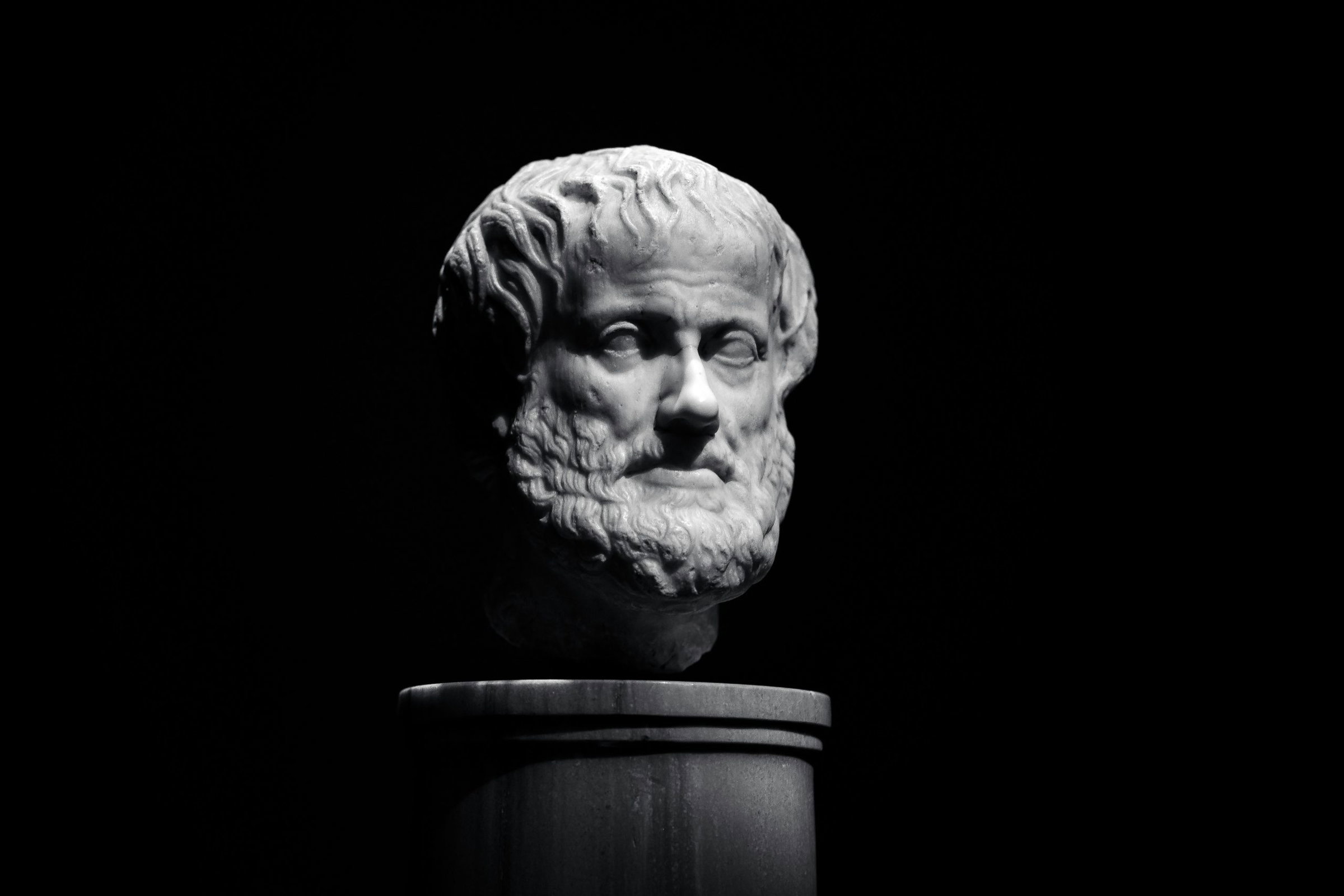

Philosophy & Mythology
The Long Conversation Humanity Has Been Having With Itself
Every generation believes its struggles are uniquely modern. Yet across thousands of years — across continents that never met — human beings described the same fears, ambitions, temptations, failures, and transformations again and again. Different languages. Different gods. Different societies.
Yet the same psychological patterns appear repeatedly. The purpose of this section is not to study history. It is to study recurring human experience.
Because what you are facing today has almost certainly been faced before — and often understood more clearly.
Philosophy and mythology preserve the long conversation humanity has been having with itself about a single question:
How should a human being live?

The Human Story Repeats
Across civilizations the same patterns appear repeatedly. A young person leaves safety to prove themselves. A successful person becomes arrogant and collapses. A society grows comfortable and loses discipline. A person avoids responsibility and loses meaning. Someone voluntarily accepts burden and becomes stronger. These are not motivational lessons.
They are observations recorded independently in:
Greek epics
Indian scriptures
Chinese philosophy
Biblical narratives
Buddhist teachings
Norse sagas
Japanese warrior codes
Civilizations separated by oceans discovered identical truths. Human nature does not evolve as fast as technology. You are not the first person to feel lost at 30. You are not the first person afraid of commitment. You are not the first person to resent discipline yet crave purpose. Someone already mapped this terrain.
Why Stories Teach Better Than Advice
Instructions change behavior temporarily. Stories reorganize perception. A rule tells you what to do. A narrative shows you why you resist doing it. Myths were not primitive attempts at science. They were psychological compression — knowledge stored in memorable form.
A hero’s journey teaches:
You must voluntarily confront difficulty.
A tragic fall teaches:
Uncontrolled pride destroys competence.
A wise elder teaches:
Time reveals consequences faster than intelligence.
A trickster teaches:
Cleverness without responsibility destabilizes everything.
People remember stories because they describe patterns, not isolated situations.
Archetypes — Recurring Personalities Across Cultures
Every civilization independently discovered the same character types.
Not because they copied each other.
The Hero
Responsibility accepted voluntarily.
The hero appears when a person stops blaming circumstance and begins shaping reality.
The Shadow
The rejected self — anger, envy, weakness.
Ignored → destructive
Integrated → strength
The Wise Guide
Long-term perception.
The voice that recognizes consequences earlier than others.
The Tyrant
Order pushed beyond life.
Control replacing purpose.
The Trickster
Intelligence detached from responsibility.
Short-term victory producing long-term instability.
The Innocent
Potential before structure. Hope without direction. You do not choose whether these forces exist.
You choose which one governs you.
Chaos and Order — The Universal Conflict
Every major tradition discovered the same tension.
Too much chaos produces:
uncertainty
anxiety
drifting
lack of identity
Too much order produces:
rigidity
fear
stagnation
lifelessness
Meaning exists at the boundary.
Greek philosophy called it balance.
Chinese philosophy called it harmony.
Indian philosophy called it dharma.
Modern psychology calls it integration.
A stable life is not perfect order.
A meaningful life is not comfort.
Growth requires entering uncertainty voluntarily while maintaining structure.
Suffering, Sacrifice & Meaning
Across cultures one observation appears repeatedly. What is avoided becomes heavier. What is carried
becomes lighter. Ancient traditions did not treat suffering as an error in existence. They treated
meaningless suffering as the real problem. Voluntary sacrifice transforms pain into
progress. Avoided responsibility produces resentment. Accepted responsibility produces identity.
The individual who carries necessary burden becomes reliable — first to others, eventually to
themselves. Modern culture tries to eliminate suffering. Ancient wisdom tried to transform it
The Stoics observed:
Pain is unavoidable — but misery created by resisting reality is optional.
The Bhagavad Gita observed:
Action cannot be avoided — only avoided responsibility.
Nietzsche observed:
A person who has a why can bear almost any how.
Across traditions the pattern repeats:
Avoided responsibility → anxiety
Accepted responsibility → identity
Burden is not merely pressure.
It is structure for the personality.
Philosophers — Different Words, Same Discoveries
Humanity keeps rediscovering similar conclusions
through different thinkers.
Not agreement.
Convergence.
Greek Philosophy
Explored virtue, reason, and disciplined character.
The good life required ordered behavior rather than impulse.
Eastern Traditions
Focused on perception, detachment, and internal alignment.
Suffering often arose from misunderstanding what could be controlled.
Stoic Philosophy
Distinguished between events and reaction.
Freedom existed in response, not circumstance.
Existential Thought
Meaning was not given to a person.
It had to be created through action.
Existential Thought
Meaning was not given to a person.
It had to be created through action.
Moral Philosophy
Actions shape character.
Character shapes destiny.
Different systems.
Same direction:
Responsibility precedes clarity.
Lessons Encoded in World Mythology
Across civilizations, stories preserved psychological insight in symbolic form. These narratives were not written merely to entertain.
They describe recurring human dilemmas:
fear
ambition
responsibility
pride
sacrifice
courage
Different cultures told different stories. Yet the patterns remain the same.
David and Goliath — Courage and Perception
In the biblical story of David and Goliath, a giant warrior dominates the battlefield. An entire army refuses to confront him. Not because they lack weapons. Because they believe the opponent is unbeatable. A young shepherd named David steps forward. Instead of matching the giant’s strength, he changes the terms of the fight.
Using a sling — a tool he understands — he defeats the giant from a distance.
The lesson is simple. Fear magnifies obstacles. Clarity reveals leverage.
The decisive moment is rarely when the obstacle disappears.It is when someone decides to confront it.
The Myth of Sisyphus — The Weight of Meaningless Effort
In Greek mythology, Sisyphus is condemned to push a boulder up a mountain forever. Each time he reaches the summit, the stone rolls back down. The punishment is not pain. It is endless meaningless repetition.
The myth captures a deep human fear: That effort might ultimately be pointless.
Modern philosopher Albert Camus suggested a different interpretation. If a person consciously chooses the burden, the struggle itself becomes meaningful. Meaning does not come from avoiding effort. It comes from choosing which burdens are worth carrying.
The Chakravyuh — Knowledge Without Completion
In the Mahabharata, the warrior Abhimanyu learns how to enter the complex battle formation known as the Chakravyuh. But he never learns how to exit it.
During battle he successfully penetrates the formation. Yet he becomes trapped inside and is eventually defeated. The story illustrates a recurring danger in life.
Partial knowledge combined with courage can lead someone into situations they cannot escape. Ambition must be accompanied by complete preparation.
The Mahabharata War — Duty and Moral Conflict
The Mahabharata is not merely a story of war. It is a study of moral complexity. The warrior Arjuna stands on the battlefield and refuses to fight. On the opposing side stand his teachers, relatives, and friends.
Victory would require destroying people he respects. Krishna’s guidance in the Bhagavad Gita introduces a profound insight. Sometimes action cannot be avoided. Responsibility demands difficult decisions.
Life rarely presents perfectly clean choices.Meaning often emerges through acting responsibly despite uncertainty.
Prometheus — The Cost of Progress
In Greek mythology, Prometheus steals fire from the gods and gives it to humanity. Fire represents knowledge, technology, and progress. For this act he is punished severely.
The myth reflects a recurring truth.Progress often requires individuals willing to challenge established authority. Advancement rarely occurs without sacrifice.
Icarus — The Danger of Unchecked Ambition
Icarus escapes imprisonment with wings made from feathers and wax. He is warned not to fly too close to the sun. But intoxicated by success and freedom, he ignores the warning. The wax melts. He falls.
The story reflects a pattern repeated throughout history. Ambition without discipline leads to collapse. Success can destroy competence when humility disappears.
Roman Stoic Lessons — Strength of Character
Roman philosophy emphasized character above circumstance. Stoic thinkers such as Marcus Aurelius, Seneca, and Epictetus argued that external events are rarely under our control. What remains under control is response.
A person may lose wealth, status, or comfort. But integrity remains possible in every situation. The Stoics therefore asked a simple question:
Not what happened to you —but what kind of person did you become while it was happening.
Civilizations Follow Human Psychology
Societies repeat personal patterns.
Prosperity → Comfort → Neglect → Instability → Renewal
Individuals follow similar cycles.
Achievement → Pride → Carelessness → Collapse → Reconstruction
History is scaled psychology.
What This Means For You
You are not starting from zero. Your confusion has precedent. Your resistance has explanation. Your fear has pattern. Your potential has requirements.
Philosophy and mythology exist not for belief. They exist for orientation. When you recognize the pattern, you stop interpreting struggle as personal failure. Instead, you recognize it as a predictable stage in development.
Clarity does not remove difficulty.It makes difficulty navigable.
Why This Matters
Philosophy provides orientation. Mythology provides memory. Together they prevent people from misinterpreting necessary struggle as personal failure. Clarity does not remove effort. It makes effort meaningful.
MasterMynd exists to help individuals recognize where they stand within the larger human story — so they can act deliberately instead of reacting unconsciously.

One Coach. Total Growth: Life | Career | Business
Quick Links
Contact Info
A/3 Shivprasad Complex,
Anand Nagar, Suncity Road, Pune
411051
PhoneWhatsapp : +917507376153